Updated July 2026 · Links checked July 2026.
Powered vs passive — read this before you buy. One speaker here, the Edifier R1280T, is powered: it has an amplifier built in, so you just plug in a source. The other four (Klipsch, Polk, Sony, Micca) are passive — they need a separate amplifier or receiver to make any sound. If you do not already own one, either pick the Edifier or budget for a stereo receiver too (our receiver guide covers good matches).
“Best brand” is the wrong question for bookshelf speakers — every major brand makes good and bad models. The useful question is: which brand’s signature model fits your room, your budget and your gear? Below are five brands worth your money, each represented by the model that earned its reputation, all with thousands of verified owner ratings.
The biggest decision is not the badge — it is powered vs passive (see the note above). Sort that out first, then pick the sound you want.
Top picks at a glance
- No amp? Start here: the powered Edifier R1280T.
- Best all-rounder: the Polk Monitor XT15.
- Most detail for the money: the Sony SSCS5.
| Brand & model | Type | Owner rating | Best for |
|---|---|---|---|
| Edifier R1280T | Powered (built-in amp) | ★ 4.6 (19,268) | Beginners / desk |
| Klipsch R-51M | Passive (needs amp) | ★ 4.8 (1,285) | Dynamics / home theater |
| Polk Monitor XT15 | Passive (needs amp) | ★ 4.8 (1,028) | All-round value |
| Sony SSCS5 | Passive (needs amp) | ★ 4.7 (4,749) | Detail / music |
| Micca MB42X | Passive (needs amp) | ★ 4.6 (1,813) | Budget / small spaces |
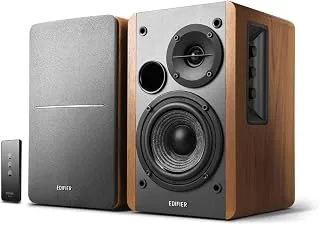
1. Edifier — Edifier R1280T
Best for beginners (no amp needed). Edifier built its reputation on plug-and-play value, and the R1280T is the proof: a powered pair with the amplifier built in, plus bass and treble dials, a remote and dual RCA/AUX inputs. Plug it straight into a TV, turntable or PC — no receiver to buy. With over 19,000 ratings it is the most-reviewed speaker here. The catch: 42W is modest, and being powered means you cannot upgrade the amp later.
Verdict — Buy it: the easiest, cheapest way into real stereo sound.
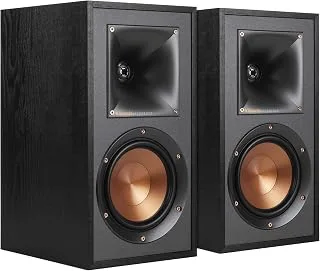
2. Klipsch — Klipsch R-51M
Best for dynamics. Klipsch’s horn-loaded Tractrix tweeter gives the R-51M its signature lively, efficient sound — 93 dB sensitivity means it goes loud on modest power. It is the brand audiophiles reach for when they want energy and impact, and it doubles as a superb home-theater front pair. The catch: Passive, so you need a receiver or amp, and the bright horn is not for everyone.
Verdict — Buy it: the pick for punch, volume and home-theater duty.
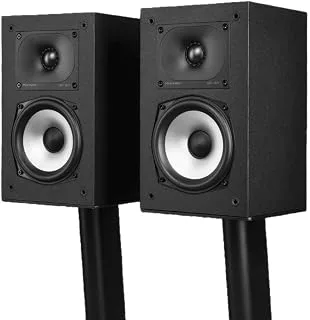
3. Polk — Polk Monitor XT15
Best all-round value. Polk’s Monitor XT line hits the sweet spot of price, build and balanced sound. The XT15 is Hi-Res Audio certified with a smooth 1-inch Terylene tweeter, and it works equally well as a stereo pair or surround speakers in an Atmos system. It is the safe, do-everything passive pick. The catch: Passive (needs an amp), and the compact cabinet wants a subwoofer for deep bass.
Verdict — Buy it: the best balanced choice for most passive setups.
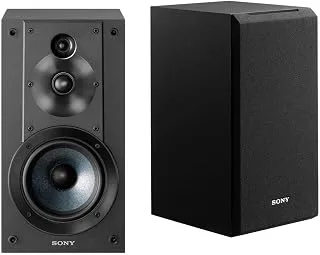
4. Sony — Sony SSCS5
Best for detail. Sony’s SSCS5 is a genuine 3-way design with a dedicated super-tweeter, which gives it airy, detailed highs that 2-way rivals cannot match. For acoustic music and critical listening on a budget it punches well above its price, and nearly 4,800 ratings back that up. The catch: Passive and a little bass-light, so it benefits from a subwoofer.
Verdict — Buy it: the pick for detail-lovers and music-first listeners.
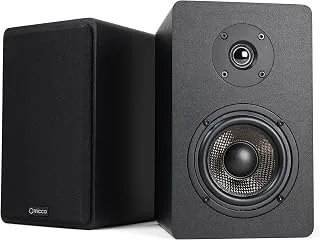
5. Micca — Micca MB42X
Best budget / compact. Micca made its name on giant-killer budget speakers, and the MB42X is the classic: a tiny passive 2-way with a silk-dome tweeter that sounds far smoother than its price. When space and money are tight — a desk, a dorm, a second system — it is the obvious starting point. The catch: Small drivers mean limited bass and output; passive, so it needs an amp.
Verdict — Buy it: the pick when budget and shelf space are the limits.
How to choose a bookshelf speaker brand
Work through three questions. Do you have an amp or receiver? If no, the powered Edifier is the simplest answer; if yes, the passive Klipsch, Polk, Sony and Micca all open up. What will you listen to? Klipsch for movies and volume, Sony for detailed music, Polk for a bit of everything, Micca for a tight budget. How big is the room? Bigger rooms favour the higher-sensitivity Klipsch or a passive pair plus a subwoofer; a desk or bedroom is happy with the Micca or Edifier.
Passive speakers are only half a system — match them to the right amp (our 8-ohm receiver guide helps) and consider a subwoofer for deep bass. If you would rather fill a bigger room, compare these against floor-standing speaker brands or, for a TV-first setup, our best soundbar brands guide. The home audio hub ties the whole system together.
Bookshelf speaker FAQ
Do bookshelf speakers need an amplifier?
Passive ones do — the Klipsch, Polk, Sony and Micca here all need a separate amp or receiver. Powered (active) speakers like the Edifier R1280T have the amplifier built in, so they work with just a source plugged in.
Which bookshelf speaker brand is best?
There is no single best brand — it depends on your setup. Edifier is best if you have no amp, Klipsch for dynamics and home theater, Polk for balanced all-round value, Sony for detail, and Micca for the tightest budget.
Are bookshelf speakers better than a soundbar?
For music and stereo imaging, yes — a real pair of speakers beats a soundbar. A soundbar wins on simplicity and for TV dialogue in a single unit. If sound quality is the priority and you have space, bookshelf speakers are the upgrade.
Do I need a subwoofer with bookshelf speakers?
Not strictly, but most compact bookshelf speakers roll off in the deep bass, so a subwoofer fills in the bottom octave for movies and bass-heavy music. The Klipsch and Sony have the most low-end on their own; the Micca benefits most from a sub.
What size amplifier do passive bookshelf speakers need?
Most of these are 8-ohm and happy with a modest 30-100W per channel stereo receiver. High-sensitivity models like the Klipsch (93 dB) go loud on even less power. See our 8-ohm receiver guide for matched options.
n