Updated July 2026 · Links checked July 2026.
In-wall vs in-ceiling — and two things to check. Strictly, in-wall speakers are usually rectangular and mount in a wall, while in-ceiling are round and drop into a ceiling — but most round “architectural” speakers here fit a cutout in either. Before you buy: (1) every speaker on this list is passive, so it needs an amplifier or AV/multi-zone receiver (our receiver guide helps); and (2) check whether the listing is a pair or a single — we note it for each below — and confirm the cutout size fits your wall or ceiling.
In-wall and in-ceiling speakers solve a specific problem: great sound with nothing on the floor or shelf. They are the go-to for whole-house audio, patios, home theaters and any room where you want speakers to vanish. As with towers and bookshelf models, “best brand” is the wrong question — the right one is which brand’s proven model fits your room, your install and your budget.
Below are five brands worth installing, each represented by its most-trusted architectural speaker, all with verified owner ratings. We flag whether each is sold as a pair or singly so the price makes sense.
Top picks at a glance
- Best overall: the Polk RC80i — proven, a pair, great value.
- Best budget: the Micca M-8C.
- Best sound: the Klipsch R-2650-C II.
| Brand & model | Sold as | Owner rating | Best for |
|---|---|---|---|
| Polk Audio RC80i | Pair | ★ 4.7 (2,347) | All-round value |
| Micca M-8C | Each | ★ 4.7 (1,639) | Budget |
| Yamaha NS-IW480C | Pair | ★ 4.7 (749) | Music / detail |
| Bose Virtually Invisible 791 II | Pair | ★ 4.5 (229) | Even coverage / easy install |
| Klipsch R-2650-C II | Each | ★ 4.9 (78) | Best sound quality |
1. Polk — Polk Audio RC80i
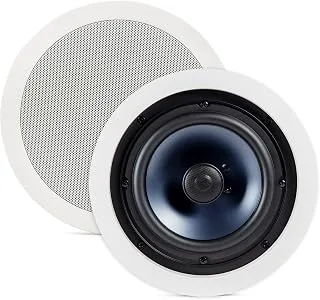
Best overall. The RC80i is the default architectural speaker for good reason: an 8-inch woofer with an aimable tweeter, moisture-resistant build for bathrooms and patios, and a paintable grille that disappears. It is sold as a pair and has more verified ratings than anything else here. Plain, reliable and well-priced. The catch: Round in-ceiling format (also wall-mountable), and like all of these it needs an amp.
Verdict — Buy it: the safe default for whole-house or ceiling audio.
2. Micca — Micca M-8C
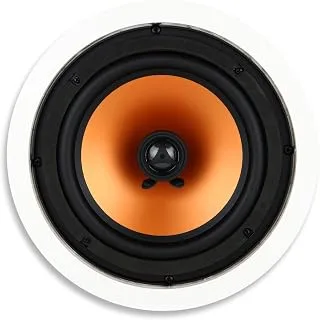
Best budget. Micca’s M-8C delivers a big 8-inch woofer and a pivoting silk-dome tweeter for a price that undercuts the big brands, and owners routinely say the bass is strong enough to skip a subwoofer. It is the value pick for filling a room or a whole house without overspending. The catch: Sold individually, and the push-fit grilles can work loose over time.
Verdict — Buy it: the budget pick when you need several rooms covered.
3. Yamaha — Yamaha NS-IW480C
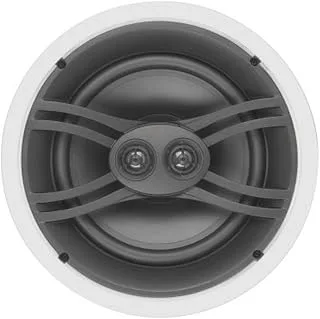
Best for music. The NS-IW480C is a genuine 3-way design with dual swivel tweeters, which gives it wider, more detailed highs than the 2-way crowd — ideal if these are your main music speakers, not just background fill. Sold as a pair with Yamaha’s reliable build. The catch: Bigger cutout than some, and passive like the rest.
Verdict — Buy it: the pick when sound quality matters more than just coverage.
4. Bose — Bose Virtually Invisible 791 II
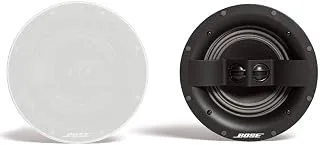
Best for even coverage. Bose’s 791 II uses two angled tweeters and “Stereo Everywhere” tuning so the sound stays balanced across the whole room, not just under the speaker. The magnetic, paintable, scrim-free grille makes it the easiest here to install and hide. A premium, fuss-free choice. The catch: Pricey, and it shines most with Bose amplification.
Verdict — Buy it: the pick for even, room-filling sound and the cleanest install.
5. Klipsch — Klipsch R-2650-C II
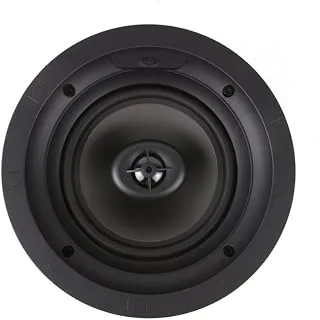
Best sound quality. Klipsch brings its signature clarity to the ceiling with the R-2650-C II: a 6.5-inch woofer and a pivoting silk tweeter behind a low-profile grille reduced 80% in depth. Owners single out its clean, precise, never-harsh sound, and it earns the highest rating on this list. The catch: Sold individually and the fewest ratings here, though uniformly excellent.
Verdict — Buy it: the pick for the best-sounding ceiling speaker of the group.
How to choose an in-wall or in-ceiling speaker brand
Work through three questions. Wall or ceiling? Round models (all five here) drop into a ceiling and most fit a wall too; if you specifically want a rectangular in-wall, check the listing. Music or background? For serious listening, the 3-way Yamaha or the Klipsch reward you; for even background fill across rooms, the Polk, Micca and Bose are ideal. How many rooms and what budget? Buy the Micca to cover many rooms cheaply, the Polk for a proven all-rounder, or the Bose and Klipsch where quality and looks matter most.
Two practical notes. These are passive, so plan the amplifier — for multiple zones you will want a multi-room receiver or a speaker selector; our 8-ohm receiver guide is the place to start. And if floor-standing or shelf speakers would suit a room better, compare our floor-standing speaker brands and bookshelf speaker brands guides, or for a single-room TV setup, the best soundbar brands. The home audio hub ties the whole system together.
In-wall & in-ceiling speaker FAQ
What is the difference between in-wall and in-ceiling speakers?
In-wall speakers are usually rectangular and mount in a wall cavity, aiming sound across the room; in-ceiling speakers are round and drop into the ceiling, aiming sound downward. Many round “architectural” speakers, like those here, fit a cutout in either a wall or a ceiling — check the listing and cutout size.
Do in-wall speakers need an amplifier?
Yes. These are passive speakers, so they need a separate amplifier or AV/multi-zone receiver to produce sound. For audio in several rooms, use a multi-zone receiver or a speaker selector switch.
Are these speakers sold in pairs or singly?
It depends on the model. The Polk RC80i, Yamaha NS-IW480C and Bose 791 II are sold as pairs; the Micca M-8C and Klipsch R-2650-C II are sold individually. We note it for each pick so you order the right quantity.
Can in-ceiling speakers go in a bathroom or outdoors?
Many can, if rated for moisture — the Polk RC80i, for example, is built for damp and humid placement like bathrooms and covered patios. For fully exposed outdoor use, choose a speaker specifically rated for it.
Do I need a subwoofer with in-ceiling speakers?
Often not for background music — the 8-inch Polk and Micca have surprising bass — but for home theater or bass-heavy music, adding a subwoofer fills in the low end the ceiling speakers cannot reach.
n