Updated July 2026 · Research-led guide; links checked July 2026.
Here is the truth every “best DIY speaker kits on Amazon” listicle dances around: the real speaker kits are not on Amazon. Serious DIY hi-fi — matched drivers, engineered crossovers, pre-cut cabinets — lives at specialist houses like Madisound, Parts Express, CSS Audio and GR-Research. What Amazon sells under “speaker kit” is mostly soldering-practice electronics: fun, educational, ten-dollar-speaker sound. Both categories are legitimate purchases. Confusing them is how people end up disappointed, so this guide maps the whole landscape honestly.
Short answer: want speakers you will actually listen to? Buy a designed two-way bookshelf kit from Madisound, Parts Express, CSS Audio or GR-Research (we earn nothing from those links — they are simply where the good kits are). Want a fun evening of soldering with a kid? The Amazon learning kits below are honest fun at toy prices.
The three tiers of “speaker kit”
| Tier | What it is | Where it lives | Sound expectation |
|---|---|---|---|
| Learning kits | Solder-it-yourself amp boards and mini speakers | Amazon, hobby shops | Novelty — the joy is the build |
| Designed hi-fi kits | Matched drivers + engineered crossover + (usually) pre-cut cabinet | Madisound, Parts Express, CSS, GR-Research | Genuinely competes with commercial speakers at 2–3× the price |
| From-scratch builds | You design or follow plans, source every part | diyAudio forums, driver vendors | As good as your skills — not a first project |
The real thing: designed hi-fi kits
A designed kit is the value hack of speaker building. The vendor has done the hard part — the crossover engineering that makes drivers sum into one coherent speaker — and you contribute assembly labor, which is exactly the part commercial speakers charge heavily for. The rule of thumb holds across the hobby: a kit’s parts quality matches commercial speakers at two to three times its price. What to look for in a first kit: a two-way bookshelf design (manageable size, forgiving), a pre-cut or flat-pack cabinet (unless you own a table saw and patience), a fully documented crossover (assembled or clearly diagrammed), and drivers from names like SEAS, SB Acoustics, Dayton or Scan-Speak. Skills required: wood glue, clamps, a soldering iron and an afternoon or two — no electronics theory needed.
The honest fun tier: Amazon learning kits
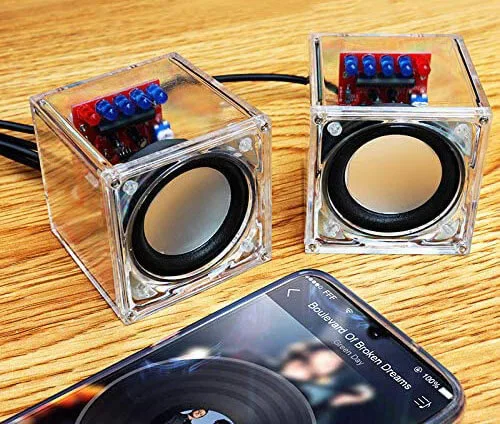
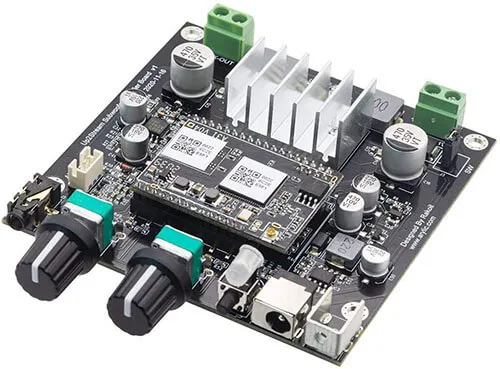
These are not hi-fi and do not pretend to be in our hands: they are soldering projects that happen to make sound. As a first electronics build, a rainy-afternoon project with a kid, or a desk trinket that you made yourself, they earn their twenty dollars.
Verdict
First real speakers you will keep: a documented two-way bookshelf kit from the specialist stores above — budget $200–500 and expect commercial $500–1,200 sound. Learning to solder / building with kids: the Amazon learning kits, enjoyed for what they are. Neither: if you just want good bookshelf speakers without glue and clamps, our bookshelf speaker brand guide is the shorter path.
DIY speaker kit FAQ
Are DIY speaker kits cheaper than buying speakers?
Per unit of sound quality, substantially – the standing rule of thumb is that a designed kit’s parts match commercial speakers at two to three times the price, because you contribute the assembly labor. Per hour of your time, that depends on how much you enjoy building.
Do I need to understand crossover design?
Not for a designed kit – the vendor has engineered the crossover, and you assemble it from documentation. Crossover design only enters the picture for from-scratch builds, which are not first projects.
What tools do I need for a first kit?
Wood glue and clamps for the cabinet, a basic soldering iron for the crossover and terminals, and a screwdriver. Flat-pack cabinet kits remove the need for any saw work.
Why are the best kits not on Amazon?
Kit vendors are small specialist engineering shops – Madisound, Parts Express, CSS Audio, GR-Research – selling direct. Amazon’s marketplace favors mass-produced electronics kits, which is why its “speaker kit” results are dominated by soldering toys rather than hi-fi designs.