Updated July 2026 · Step diagrams are ElectroTalks originals. Links checked July 2026.
Here is the diagnosis hiding behind most “my CB won’t tune” complaints: the antenna is fine, the radio is fine, and the ground is garbage. A badly grounded mount gives you sky-high SWR that no amount of whip-trimming fixes, weak transmit, and a receiver full of alternator whine. Grounding is a twenty-minute job with a $10 strap — and it is the highest-leverage twenty minutes in CB installation.
Short answer: your antenna mount needs a direct, bare-metal, low-resistance path to the vehicle chassis. Scrape the paint under the mount, add a wide braided ground strap to the frame if the mount sits on an isolated panel, and confirm with a multimeter: continuity between mount and chassis should read near zero ohms. Then tune SWR to under 1.5:1.
How to ground a CB antenna, step by step
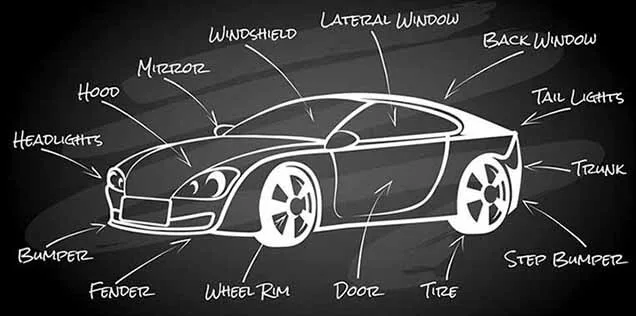
- Pick a mount location with metal behind it. The antenna’s other half is the vehicle body (the ground plane). Center of the roof is electrically best; fender and mirror mounts work but need more care with bonding.
- Get bare metal under the mount. Paint and powder coating are insulators. Scrape or sand a small contact patch where the mount bolts through, or use a star washer that bites through the coating to the metal.
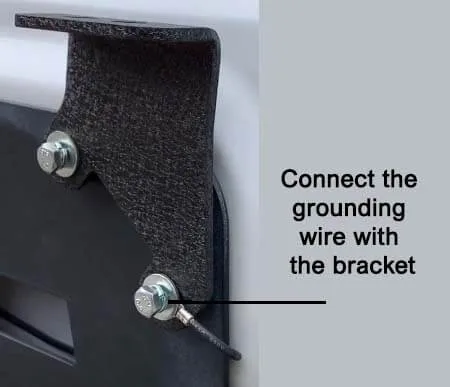
- Bond the mount to the chassis with braid, not wire. RF travels on the surface of a conductor, so a skinny round wire is nearly useless as an RF ground. Use a short, wide braided copper strap from the mount (or the panel it sits on) to a solid chassis/frame point. Shorter and wider is always better.
- Bond doors, hood and bed panels if noise persists. On trucks, panels hinge on painted or rubber-isolated joints and float electrically. A strap across each troublesome joint quiets receive noise and firms up the ground plane.
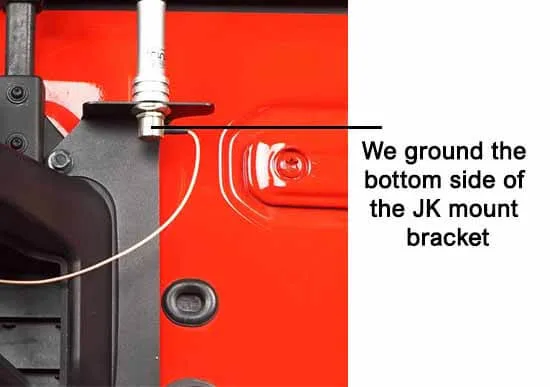
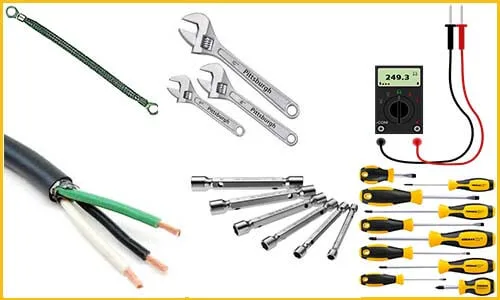
- Test it with a multimeter. Set to continuity/ohms, one probe on the antenna mount, one on bare chassis metal (or battery negative). You want near-zero ohms. Anything flickering or in the tens of ohms means a coating or isolated panel is still in the path.
- Now — and only now — tune SWR. With the ground solid, set SWR with an SWR meter: under 2:1 is workable, under 1.5:1 is the target. If SWR is high on all channels equally, suspect the ground or coax; high on one end of the band means the whip needs trimming or raising.
Fiberglass vehicles, RVs and boats: the no-ground-plane exception
No steel body, no ground plane — grounding a mount to fiberglass does nothing. That is what no-ground-plane (NGP) antenna kits exist for: they use a specially matched coax and antenna that carry their own counterpoise. If your vehicle is fiberglass (many RVs, boats, some Jeeps’ tubs), buy an NGP kit rather than fighting physics. Our Firestik guide covers the NGP options.
What about magnet mounts?
Magnet mounts ground capacitively — the magnet and the sheet metal under it form a capacitor that couples RF to the body without a wired connection. That is why a Wilson magnet mount works on an unmodified roof. It is genuinely effective, though a hair less efficient than a well-bonded drilled mount — the trade for zero holes.
Base stations: different job, different rules
A home base antenna wants an 8-foot copper ground rod at the mast base, bonded to the mast and (for safety) tied into the house grounding system per electrical code. Lightning protection is its own discipline — if your mast is the tallest thing around, have a licensed electrician review the grounding; this is the one part of CB installation where getting it wrong risks more than bad SWR.
CB grounding FAQ
Why is my SWR still high after grounding?
If SWR is high across all 40 channels equally, the problem is usually still the ground path, the coax, or its connectors – re-test mount-to-chassis continuity and inspect the PL-259s. High SWR at only one end of the band is a tuning issue: trim the whip (high at channel 40) or raise it (high at channel 1).
Do magnet-mount antennas need a ground wire?
No. The magnet couples to the sheet metal capacitively, which serves as the RF ground. They need a good-sized steel surface under them – the middle of a steel roof, not a plastic trim panel.
How do I ground a CB antenna on a fiberglass vehicle?
You cannot create a ground plane on fiberglass. Use a no-ground-plane (NGP) antenna kit, which is matched to work without one. A standard antenna will never tune properly on a fiberglass body.
Does grounding improve receive too?
Yes. A solid ground and bonded panels are the standard fix for alternator whine and ignition noise in the receiver – often more audibly than they change transmit.
What should the multimeter read on a good ground?
Near zero ohms between the antenna mount and bare chassis metal. Tens of ohms or an unstable reading means paint, corrosion or an isolated panel is still in the path.