Updated July 2026 · Research-led comparison from manufacturer specs and long-term operator reports; links checked July 2026.
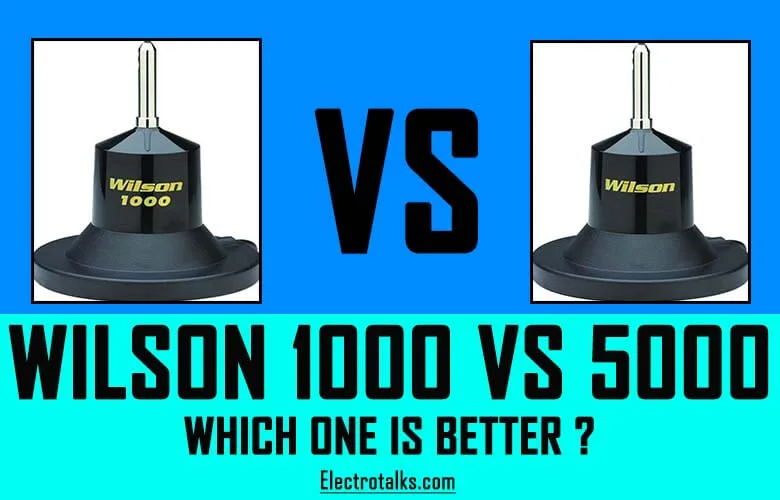
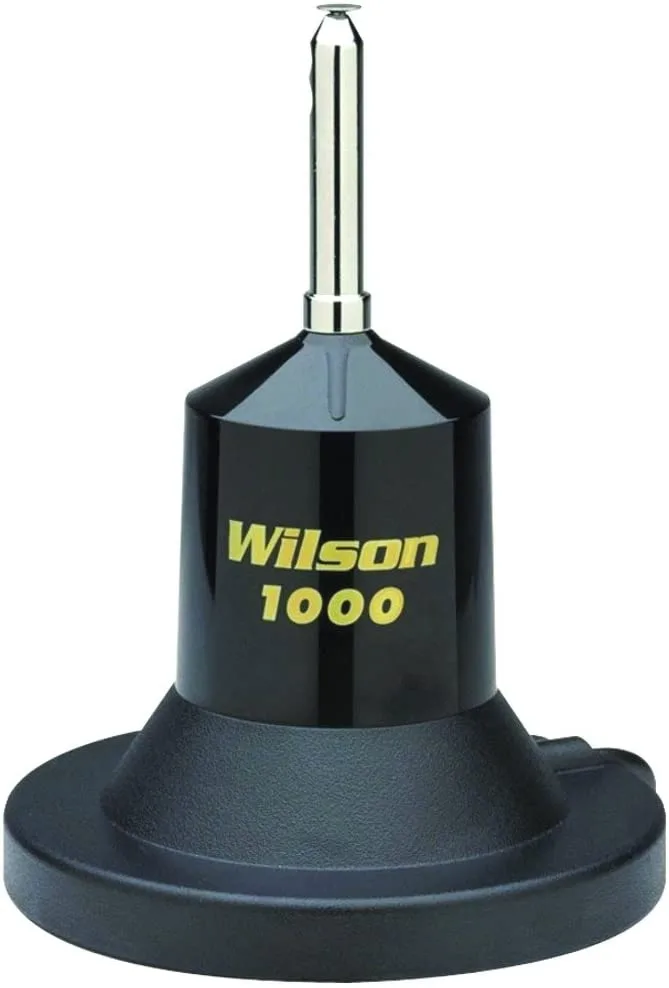
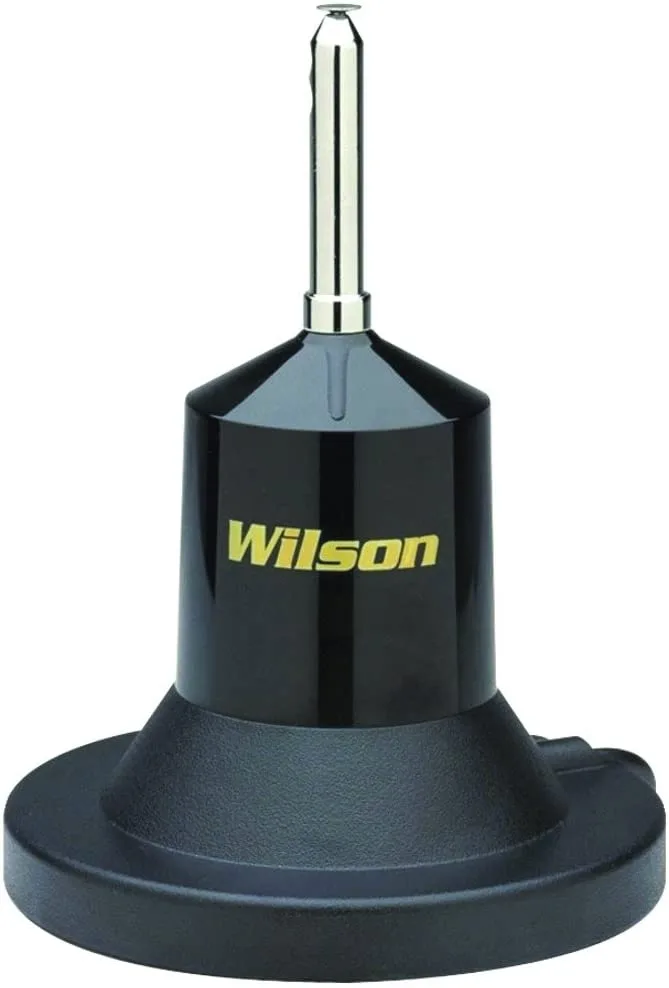
The Wilson 1000 and Wilson 5000 are the same antenna wearing two coats. Same design, same 62-inch stainless whip, same magnet or roof mounts — the 5000 swaps the 1000’s 10-gauge coil wire for 6-gauge and upgrades the included coax. That is the entire difference, and Wilson prices it at roughly a $20–30 premium. Whether that premium buys you anything depends on a number most “vs” pages politely ignore: your transmit power is 4 watts.
Short answer: at legal CB power, both antennas are loafing at under 1% of their ratings — you cannot buy a performance difference you could hear. Get the Wilson 1000 and keep the money. The 5000 earns its premium in exactly one scenario: licensed ham operators running real power on 10/11-meter setups, where its 5 kW rating and thicker coil matter.
Wilson 1000 vs 5000, side by side
| Wilson 1000 | Wilson 5000 | |
|---|---|---|
| Coil wire | 10-gauge | 6-gauge (thicker, lower loss) |
| Power handling | 3,000 W AM | 5,000 W AM |
| Whip | 62″ stainless, tapered | 62″ stainless, tapered |
| Included coax | RG-58 | RG-8X mini (lower loss) |
| Mounts | Magnet, roof, trunk | Magnet, roof, trunk |
| Audible difference at 4–12 W | None you could pick in a blind test — instruments required | |
| Amazon listing rating | ★ 4.4 (256 ratings) | ★ 3.8 (1,196 ratings) |
| Best for | Every legal CB station | Licensed high-power 10 m operators |
Worth noting from that last comparison row: the 5000’s own Amazon listing scores notably lower than the 1000’s — skim its reviews and the complaints cluster around shipping damage and fitment rather than the antenna’s electrical design. Buy from a listing with recent reviews either way.
Why they perform the same on a CB
Power-handling ratings describe what the coil survives, not how well it radiates. A thicker coil wire has marginally lower resistive loss — a real effect that matters when kilowatts are flowing through it, and a rounding error at 4 watts AM or 12 watts PEP SSB. Operators who have run both back-to-back consistently report you need instruments to find the difference. What actually changes your signal is everything around the antenna: mounting position (center-roof beats fender), a solid ground — see our grounding guide — and SWR tuned below 1.5:1 with a meter.
And if the 5,000-watt rating is calling to you for other reasons: amplifiers on CB are illegal, full stop — here is what the FCC rules actually say and the legal path to real power (a ham licence and 10-meter gear, where the 5000 genuinely belongs).
Verdict, per buyer
Legal CB user (that is, almost everyone): buy the Wilson 1000 — identical on-air results, better-reviewed listing, money left for good coax routing. Licensed ham running high power on 10 m: the 5000 is the right tool — its coil and included RG-8X are built for your wattage. Undecided and future-proofing: the extra $25 will not hurt, but a better ground and mount position will help more.
Wilson 1000 vs 5000 FAQ
Is the Wilson 5000 better than the 1000?
Electrically it is marginally lower-loss thanks to the 6-gauge coil, but at legal CB power the difference is not audible – operators who have measured both report you need instruments to find it. At high amateur power levels the 5000’s advantage becomes real.
Which coax comes with each?
The 1000 ships with RG-58; the 5000 ships with lower-loss RG-8X mini. If you buy the 1000 and want the coax upgrade, RG-8X is available separately for less than the price gap between the antennas.
Do the ratings mean I can run more power on CB?
No. CB is capped at 4 watts AM / 12 watts PEP SSB regardless of what the antenna can survive, and external amplifiers are prohibited on CB by FCC rule. The multi-kilowatt ratings are relevant to licensed amateur service, not CB.
Are the whips the same?
Yes – both use the 62-inch tapered stainless whip, and both tune the same way. Set SWR below 1.5:1 with a meter after mounting; the mount position and ground matter more than which coil is under the whip.