Updated July 2026 · Links checked July 2026.
What rock actually asks of a car speaker. Three things: detailed highs so distorted guitars and cymbals stay distinct (tweeter quality), tight midbass for kick drum and bass guitar (cone and motor), and power handling because rock is played loud. Two honest caveats: these are 6.5-inch door speakers — they deliver midbass, not the sub-bass thump of a kick drum, so a small subwoofer transforms rock; and most of these only come alive with more power than a factory head unit gives, so an amp is the single biggest upgrade after the speakers themselves.
Rock is a demanding genre for car audio. Dense guitar layers, crashing cymbals, a hard-hitting rhythm section — cheap factory speakers smear all of it together. The fix is a set of 6.5-inch coaxial speakers chosen for the things rock needs (see the note above), and the five below are the proven picks, each leaning toward a different rock priority.
All are popular 6.5-inch coaxials that drop into the most common door locations. We have matched each to the rock listener it suits best — punch, clarity, balance, loudness, or value.
Top picks at a glance
- Best for most rock fans: the Rockford Fosgate Punch P1650 — punch + clarity.
- Crispest highs: the Infinity Reference 6532IX.
- Best value: the JBL Club 6520.
| Speakers | Power / type | Owner rating | Best for |
|---|---|---|---|
| Rockford Fosgate Punch P1650 | 55W RMS, 2-way | ★ 4.6 (9,457) | Midbass punch |
| Infinity Reference 6532IX | 55W RMS, 2-way | ★ 4.7 (706) | Detailed highs |
| Pioneer TS-A1670F | 70W RMS, 3-way | ★ 4.5 (982) | All-round balance |
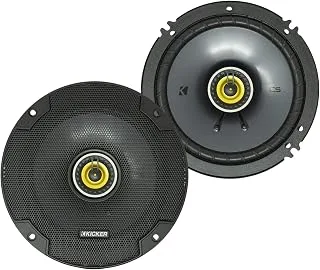
| Kicker CSC65 | 100W RMS, 2-way | ★ 4.4 (265) | Power handling / loud |
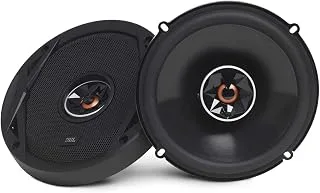
| JBL Club 6520 | 45W RMS, 2-way | ★ 4.5 (6,426) | Value / efficiency |
1. Rockford Fosgate Punch P1650 — Best for punch
Rock lives and dies on the kick drum and bass guitar, and the Punch P1650 is built for exactly that — tight, aggressive midbass that hits hard without an amp, and a crisp tweeter for guitar bite. With nearly 9,500 ratings it is the most-trusted pick here and the one to get if rhythm and impact matter most. The catch: A door speaker, not a subwoofer — you still want a sub for the lowest bass notes.
Verdict — Buy it: the pick for the punchiest, most impactful rock sound.
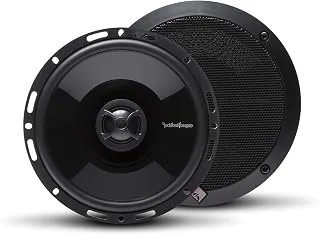
2. Infinity Reference 6532IX — Best for highs & clarity
Distorted guitars and cymbals need a clean, detailed treble or they turn to mush, and Infinity’s edge-driven dome tweeter delivers smooth, extended highs that pull those layers apart. With the highest rating on this list, it is the choice for listeners who want clarity and detail in busy rock mixes. The catch: Bass is good but not as physically punchy as the Rockford.
Verdict — Buy it: the pick for crisp guitars, cymbals and vocal clarity.
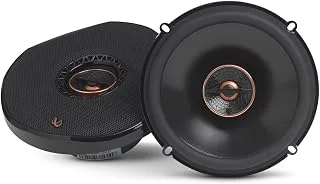
3. Pioneer TS-A1670F — Best all-rounder
The 3-way TS-A1670F adds a dedicated midrange to the usual woofer-and-tweeter combo, which fills out vocals and rhythm guitar for a fuller, more balanced sound across the whole rock spectrum. A higher 70W RMS rating also means it takes more power for louder, cleaner playback. The catch: The deeper basket can be a tight fit in some older door cutouts.
Verdict — Buy it: the pick for balanced, full-range sound at higher volume.
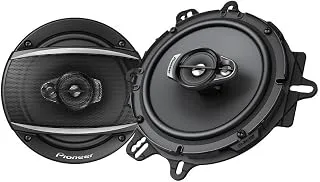
4. Kicker CSC65 — Best for going loud
Rock is meant to be loud, and the CSC65 has the highest power handling here at 100 watts RMS, with an extended voice coil built to take the heat of long, hard listening sessions. Pair it with an amp and it stays composed at volumes that make lesser speakers strain. The catch: Needs an amp to reach its potential; modest on factory head-unit power alone.
Verdict — Buy it: the pick if you run an amp and play it loud.
5. JBL Club 6520 — Best value
JBL’s Plus One woofer cone moves more air than a typical 6.5-inch driver, so the Club 6520 sounds bigger and louder than its price and even on modest factory power — thanks to high sensitivity. With over 6,400 ratings it is the proven budget upgrade that still rocks. The catch: Less outright power handling than the Kicker or Pioneer.
Verdict — Buy it: the pick for the most rock per dollar, amp optional.
How to choose car speakers for rock
Match the speaker to how you listen. Run them off the factory stereo? Choose a high-sensitivity speaker (the JBL, Rockford) that gets loud on little power. Adding an amp? Then power handling (RMS) matters — the Kicker and Pioneer take more watts for cleaner volume. Want clarity or impact? The Infinity leans detailed and smooth; the Rockford leans punchy and aggressive; the 3-way Pioneer splits the difference.
Whatever you pick, two upgrades make rock come alive in a car: a small subwoofer for the kick-drum and bass-guitar weight a door speaker cannot produce, and an amplifier to drive everything cleanly — our guide on wiring speakers to an amp walks through it. If your new fronts sound stronger than the rear, see why rear speakers go quiet, and to feed them a clean signal, the right head unit helps. The car electronics hub covers the rest of the build.
Car speakers for rock FAQ
What kind of car speakers are best for rock music?
Look for crisp, detailed highs (a good tweeter) for guitars and cymbals, tight midbass for the kick and bass guitar, and decent power handling because rock is played loud. A 6.5-inch coaxial like the Rockford Punch or Infinity Reference covers all three; a 3-way like the Pioneer adds extra midrange detail.
Do I need a subwoofer for rock in my car?
You do not strictly need one, but it makes a big difference. Door speakers produce midbass, not the deep sub-bass of a kick drum or low bass-guitar notes. A compact subwoofer fills in that bottom octave and is the single biggest upgrade for rock.
Do these car speakers need an amplifier?
They will play off a factory stereo, but most come alive with an amp. High-sensitivity models like the JBL and Rockford get loud on factory power; higher-power models like the Kicker and Pioneer really need an amp to reach their potential and stay clean at volume.
Are coaxial or component speakers better for rock?
Component sets (separate tweeter and woofer) give better imaging and clarity and are the audiophile choice. Coaxials like these are far easier to install, cheaper, and still a huge upgrade over factory — for most people they are the practical pick, especially as a first step.
What size speakers do most cars use?
6.5-inch (and the closely related 6.75-inch) is by far the most common door-speaker size, which is why all five here are 6.5-inch. Check your vehicle’s fitment before buying; cheap adapter brackets handle most minor size or depth differences.
n