Updated July 2026 · Research-led guide; links checked July 2026. Nothing here is legal advice.
Check the law before you press record. Recording your neighbours’ speech — even through a wall — can violate state wiretap and privacy laws, and consent rules differ by state. The legally safer evidence is usually measured noise levels: a sound level meter logging decibels with timestamps documents the nuisance without capturing anyone’s words. When in doubt, ask your local authority or a lawyer what evidence they will actually accept.
Here is what most “best microphone for noisy neighbours” lists get wrong: your goal is not a beautiful recording — it is evidence someone will act on. Landlords, councils and courts respond to objective, timestamped, repeatable documentation. That changes the shopping list completely: a $25 logging decibel meter often beats a $200 microphone, because “62 dB at 1:40 AM, eleven nights running” is an argument, and a muffled recording of bass through drywall is a vibe.
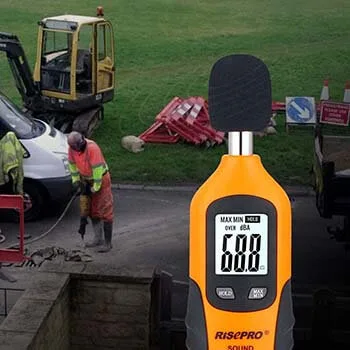
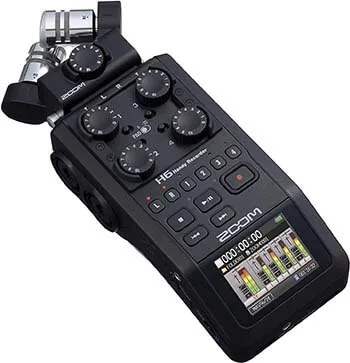
Short answer: start with a sound level meter (the RISEPRO below) and a written log — that is the complaint-file backbone. Add a standalone recorder (the Zoom H6 if it is worth real money to you, or a budget USB mic if a laptop can run overnight) only to document the character of the noise, and only after checking your state’s recording rules.
The evidence kit, by job
| Tool | What it proves | Runs unattended? | Legal exposure |
|---|---|---|---|
| Sound level meter (logging) | How loud, exactly when — the ordinance-violation numbers | Yes | Lowest — no speech captured |
| Standalone recorder (Zoom H6 class) | What the noise actually is — character and duration | Yes, hours of battery | Check consent laws first |
| USB mic + computer | Same as above on a budget | Needs the computer on all night | Check consent laws first |
| Phone voice-memo app | Better than nothing for one-off incidents | Sort of | Same as any recording |
The foundation: a logging sound level meter
Noise ordinances are written in decibels — many municipal night-time limits sit in the 45–60 dB range (check your local code for the actual number and measurement conditions). A meter turns your complaint from “it was really loud” into data. The RISEPRO-class meters cover the 30–130 dB range, and the discipline matters more than the gadget: log date, time, reading and duration, every incident, same spot in the room. Ten entries beat one angry paragraph.
The recorder tier: character, not just volume
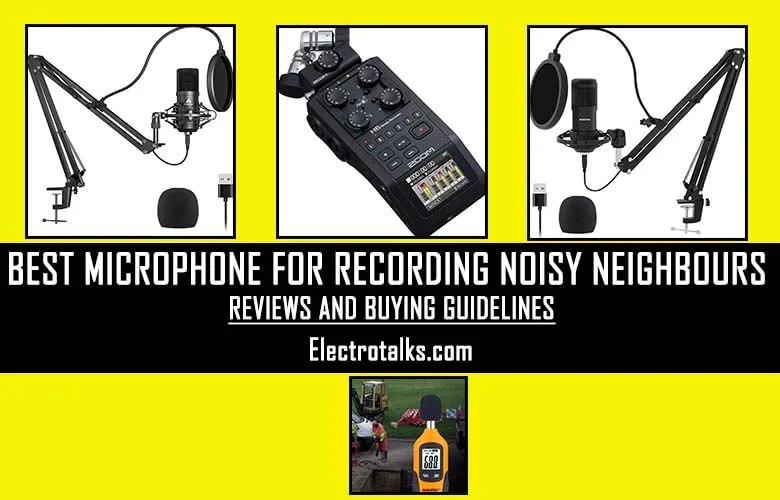
Sometimes the meter numbers are borderline but the noise itself makes the case — the 2 AM treadmill, the sixth hour of the same bassline. A standalone recorder documents that (where legal — see the box up top). The Zoom H6 is the buy-once answer: broadcast-grade, battery-powered for overnight sessions, real timestamps. On a budget, a USB mic like the Sudotack ST-800 or MAONO kit does the capture job for a fraction of the price — the catch is the computer that must stay on beside it all night, which is exactly when you wanted to be asleep.
One myth to retire: you do not want a “more sensitive” microphone to amplify quiet neighbour noise into damning evidence. A recording that makes noise sound louder than it is cuts against you the moment anyone checks it against the meter readings. Honest levels are the point.
The process that actually gets results
- Log first. Two weeks of dated dB readings and notes, before any confrontation.
- Talk, once, politely — with the pattern in hand, not mid-rage at 1 AM.
- Escalate with the file: landlord or HOA first, then the local noise line — officials who can measure with calibrated equipment respond faster when your log tells them when to show up.
- Keep logging through the process; the pattern after a warning matters as much as before it.
Recording noisy neighbours FAQ
Is it legal to record my noisy neighbours?
It depends where you live and what you capture. Measuring and logging decibel levels is generally the safest route because it records no speech. Audio recording that captures conversations can implicate state wiretap and consent laws even through a wall – check your state’s rules or ask a lawyer before recording, and never share recordings publicly.
What decibel level counts as a noise violation?
It varies by municipality – many night-time residential limits fall somewhere in the 45-60 dB range, measured under conditions your local code specifies. Look up your city or county noise ordinance for the real number; your log should use its measurement conditions.
Will a phone recording work as evidence?
It is better than nothing for documenting an incident, but phone mics are uncalibrated and auto-adjust levels, so they prove little about loudness. A written log plus meter readings is the stronger backbone; recordings add character, not proof of volume.
Do I need an expensive microphone?
No – and chasing sensitivity is counterproductive, since evidence that exaggerates loudness undermines your credibility. A modest meter, a consistent log, and (where legal) any honest recorder beats an audiophile microphone for this job.