Updated July 2026 · Links checked July 2026.
Sizing tool: our UPS runtime calculator shows exactly how long a given UPS will run your gear — with the real battery numbers.
When a UPS battery won’t charge, the instinct is to assume the unit is broken. Usually it isn’t – the battery is a consumable that has simply worn out. The sealed lead-acid battery inside most home and office UPS units lasts only about three to five years, and once it can no longer hold a charge, “not charging” is exactly how it announces the end of its life.
That said, a few quick checks can rule out a loose connection, a blown fuse or a deeply discharged battery before you spend money. Here’s how to tell whether you need a five-minute fix or a new battery – and, occasionally, a new UPS.
The short version
- UPS more than 3 years old? The battery is almost certainly at end of life – replace it.
- Newer unit? Check the terminals and fuse before blaming the battery.
- New battery still won’t charge? The charger circuit in the UPS may be the fault.
Match your situation, then jump to the fix.
ElectroTalks · UPS battery map
UPS battery won’t charge? Start here
The battery is usually a worn consumable, not a fault. Match the clue, then act.
Decider: sealed lead-acid lasts 3-5 years – replace it.
Decider: a loose lead or blown fuse stops charging without killing the battery.
Decider: SLA left flat over a year often won’t accept a charge again.
Decider: if a known-good battery still won’t charge, the charger circuit is the fault.
First, how old is the battery?
This is the question that solves most cases. The valve-regulated sealed lead-acid (SLA) battery in a typical UPS is rated for roughly three to five years, and heat shortens that – a UPS in a warm cabinet ages its battery faster. Engineers define a battery’s end of useful life as the point where it can no longer hold about 80% of its rated capacity; past that, decline is rapid. If your UPS has been in service that long and now won’t charge or only runs for seconds on battery, the cell is simply worn out. The chemistry behind why a tired lead-acid cell stops accepting charge is covered well by Battery University’s guide to charging lead acid.
Check the connections and fuse
On a newer unit, rule out the simple stuff before condemning the battery. Power down and unplug the UPS, open the battery compartment, and check that the spade terminals are fully seated and free of corrosion – a loose or dirty connection stops charging without harming the battery. Many UPS units also have a small fuse in the battery circuit; a blown one cuts the charge path entirely. Reseat the leads, replace a blown fuse with the same rating, and try again. Our guide on how to tell when a UPS battery needs replacing covers the self-test that confirms battery health.
A deeply discharged battery may be gone
Sealed lead-acid batteries hate being left flat. If a UPS sat unplugged or stored for many months, the battery can self-discharge so deeply that it won’t accept a charge again – the plates sulfate and capacity is lost permanently, often within 18 months of sitting empty. A charger may show it charging while the battery holds almost nothing. If the unit has been stored flat, assume the battery needs replacing rather than reviving.
When it’s the UPS, not the battery
Occasionally the fault is the UPS itself. A power surge can damage the internal charging circuit, so the unit powers on and passes mains through but never charges the battery. The test is simple: if you fit a known-good or brand-new battery and it still won’t charge, the charger circuit is the problem and the UPS should be retired. At that point, replacing the whole unit is usually wiser than repairing it – see our picks for the best UPS for a home theater, and the explainer on the difference between a UPS and a plain battery. If the UPS won’t run your gear during an outage at all, our guide to a UPS that isn’t working on battery helps too.
Replacing the battery
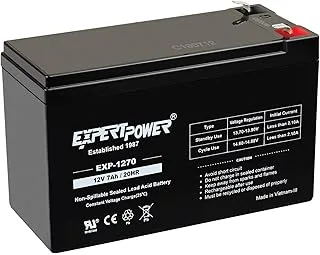
If the battery is the culprit, swapping it is usually a five-minute job – but match the spec. Most small home and office UPS units use a 12V 7Ah (sometimes 9Ah) sealed lead-acid battery, and the spade terminals come in F1 (narrow) or F2 (wide) widths, so check your old battery’s printed rating and terminal type before buying. Always power off and unplug the UPS first, and avoid letting a tool bridge the two terminals.
UPS battery not charging FAQ
Why is my UPS battery not charging?
Most often the sealed lead-acid battery has reached the end of its 3-5 year life and can no longer hold a charge. Other causes are a loose or corroded terminal, a blown battery fuse, a deeply discharged (stored-flat) battery, or a faulty charging circuit in the UPS.
How long does a UPS battery last?
Typically three to five years for a sealed lead-acid battery, less in a hot location. Once it can hold under about 80% of its rated capacity, it declines quickly and should be replaced.
Can a completely dead UPS battery be revived?
Usually not. A sealed lead-acid battery left flat for many months sulfates and permanently loses capacity, so it won’t take a proper charge again. Replacement is the reliable fix.
How do I know if it’s the battery or the UPS?
Fit a known-good or new battery of the correct spec. If it charges and runs, the old battery was the problem. If a good battery still won’t charge, the UPS’s charging circuit is faulty and the unit should be replaced.
What battery does my UPS need?
Most small UPS units use a 12V 7Ah (sometimes 9Ah) sealed lead-acid battery with F1 or F2 spade terminals. Check the rating and terminal type printed on your existing battery and match it exactly.
Is it safe to replace a UPS battery myself?
Yes, for a small home UPS it’s a straightforward swap. Power off and unplug the unit first, don’t let a tool short the two terminals, and recycle the old sealed lead-acid battery at a proper drop-off.
n